
 David
DavidData analytics has become one of the most powerful forces shaping the global business landscape. As organizations face increasing competition, shifting consumer expectations, and rapidly evolving digital ecosystems, data has emerged as the foundation of informed decision-making. No longer limited to large enterprises, data analytics is now central to growth strategies across industries—from retail and finance to healthcare, manufacturing, and transportation. Its ability to convert raw information into actionable insights is not only enhancing operational efficiency but also redefining how businesses innovate, compete, and deliver value.
At its core, data analytics involves extracting meaning from vast volumes of structured and unstructured data. What has changed over the past decade is the speed, scale, and sophistication with which this analysis can be performed. Modern analytics tools can process terabytes of information in seconds, detect patterns humans might overlook, and provide real-time intelligence that supports strategic and tactical decisions. This shift is enabling companies to move from intuition-driven choices to evidence-based decision-making.
One of the most profound transformations driven by data analytics is the ability of businesses to anticipate trends rather than simply react to them. Predictive analytics uses historical data and statistical modeling to forecast future events, giving companies the foresight needed to plan product demand, optimize inventory, assess financial risks, or detect market shifts before they occur. In industries such as finance and e-commerce, predictive algorithms have become indispensable for fraud detection and personalized recommendations. As accuracy improves, predictive analytics is evolving into prescriptive analytics, where systems not only anticipate outcomes but also suggest the best course of action.
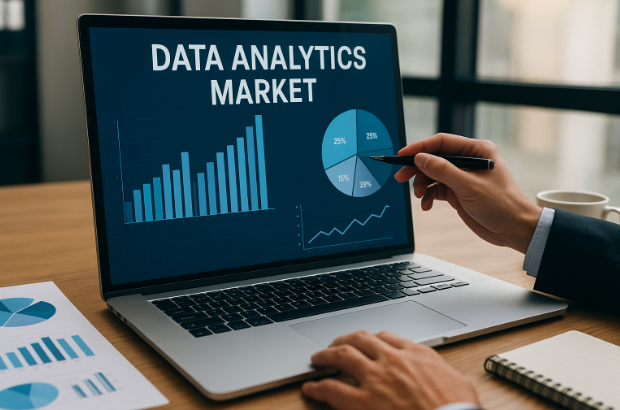
The Data Analytics Market Size was valued at USD 52.68 Billion in 2023 and is expected to reach USD 483.41 Billion by 2032 and grow at a CAGR of 28.0% over the forecast period 2024-2032. This remarkable growth reflects the increasing demand for data-driven intelligence across organizations of every scale. As digital adoption surges and businesses generate unprecedented volumes of information, the importance of interpreting this data effectively becomes even more critical. Companies that leverage analytics successfully are gaining a sharper competitive edge—they can enhance customer experiences, streamline operations, accelerate innovation, and mitigate risks with significantly greater accuracy.
The expanding market also highlights the evolution of analytics technologies, from traditional reporting tools to advanced artificial intelligence and machine learning systems capable of recognizing complex patterns at high speed. With cloud computing making analytics more accessible and cost-efficient, even small and medium-sized enterprises are investing heavily in data insights to stay relevant in a rapidly transforming digital economy. Over the next decade, this growth trajectory is expected to intensify as more industries embrace automation, real-time data processing, and predictive intelligence as integral components of business strategy.
Beyond forecasting, data analytics is transforming how businesses understand and interact with their customers. Today’s marketplace demands personalized experiences, and analytics enables companies to segment audiences, predict preferences, and tailor offerings accordingly. Whether it’s targeted marketing campaigns, customized product recommendations, or dynamic pricing strategies, customer analytics helps organizations deliver relevance at scale. This personalization enhances engagement, strengthens brand loyalty, and ultimately drives revenue growth. In sectors like retail and entertainment, personalization powered by analytics has redefined consumer expectations, setting new standards for digital experiences.
Operational efficiency is another significant area where data analytics is making a measurable impact. Through real-time monitoring and optimization, companies are improving resource allocation, minimizing downtime, and reducing costs. Manufacturers use analytics to monitor production lines, detect anomalies, and predict equipment failures before they disrupt operations. Logistics companies analyze route efficiency, transportation times, and fuel consumption to streamline supply chain processes. Even in human resources, analytics is improving workforce planning, performance assessment, and talent acquisition by identifying patterns that contribute to employee success and retention.
In addition, data analytics is enhancing strategic decision-making at the executive level. Leaders equipped with timely, accurate data are better positioned to evaluate business performance, identify growth opportunities, and mitigate potential threats. Dashboards and visualization tools, for example, make complex datasets easy to interpret, enabling decision-makers to act quickly and confidently. This shift has promoted a culture of transparency and accountability, where decisions are grounded in measurable insights rather than assumptions.
The integration of AI and machine learning has taken data analytics to unprecedented heights. These technologies use algorithms that learn from data and improve over time, enabling deeper insights and automated decision processes. Machine learning models can detect subtle correlations, analyze natural language, and perform complex tasks such as image recognition or sentiment analysis. This AI-driven analytics is particularly impactful in sectors like finance, where automated credit scoring and risk evaluation have replaced manual processes, and in healthcare, where algorithms assist in diagnosing diseases, interpreting imaging data, and predicting patient outcomes.
Data analytics is also playing a crucial role in strengthening cybersecurity. With the rise of cyberattacks and sophisticated digital threats, organizations rely on analytics to detect abnormal patterns, monitor network activity, and identify vulnerabilities in real time. By analyzing logs, access patterns, and behavioral data, companies can detect breaches early, reduce damage, and implement stronger security protocols. As cyber threats escalate, analytics will continue to serve as the backbone of proactive digital defense strategies.
However, the transformation driven by data analytics is not without challenges. Organizations must navigate issues related to data privacy, regulatory compliance, and ethical use of artificial intelligence. Ensuring data accuracy, eliminating biases in algorithms, and establishing secure data governance frameworks are essential for maintaining trust and reliability. Businesses must also invest in talent capable of interpreting complex data and translating insights into strategy.
Despite these challenges, the future of data analytics is overwhelmingly positive. As technologies continue to evolve, analytics will become even more intuitive, automated, and integrated across every aspect of business operations. The convergence of AI, cloud computing, and real-time processing will enable organizations to harness the full potential of their data, driving innovation at an unprecedented pace.
In conclusion, data analytics is not merely enhancing business practices—it is fundamentally reshaping them. Its ability to provide deep insights, streamline operations, improve customer experiences, and support strategic decision-making makes it one of the most transformative forces of the modern era. As the volume and complexity of data continue to grow, organizations that embrace analytics will be best positioned to thrive in an increasingly competitive and digital-first world.