
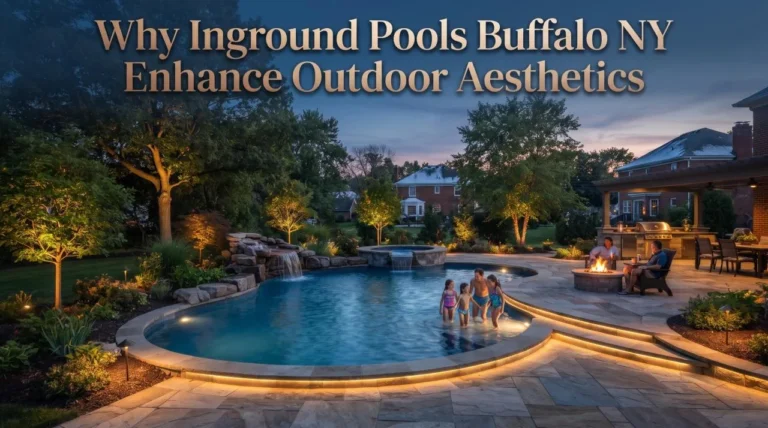

An inground pool can transform an ordinary backyard into a beautiful outdoor retreat. Beyond providing a place to swim and relax, a well-designed pool introduces structure, visual interest, and a sense of luxury to a property’s landscape. When thoughtfully integrated with patios, gardens, lighting, and outdoor living spaces, it can make the entire yard feel more cohesive and inviting.
For homeowners in Western New York, outdoor design requires particular attention to seasonal changes, weather conditions, and the way a backyard will be used throughout the year. A pool should look attractive during the summer swimming season while complementing the property even when temperatures drop. The right materials, shapes, landscaping, and surrounding features can help create a polished outdoor environment that feels intentional rather than simply functional.
Inground pools offer considerable design flexibility, making it possible to develop a backyard that reflects a homeowner’s architectural style, personal preferences, and available space. From clean contemporary layouts to naturalistic retreats, the possibilities extend far beyond the pool itself.
1. Creating a Focal Point in the Backyard
One of the most noticeable aesthetic benefits of an inground pool is its ability to establish a clear focal point. Without a central feature, a large backyard can sometimes feel unfinished, with open lawn areas and scattered landscaping that lack a unified design.
A pool introduces a defined shape and a visual destination. It naturally draws the eye and helps organize the surrounding space. Whether positioned near the center of the yard or tucked into a corner, it can provide a foundation for arranging patios, seating areas, garden beds, and pathways.
The pool’s shape plays an important role in determining the overall appearance. Rectangular pools often complement modern homes and properties with geometric landscaping. Their straight lines create a clean, organized look that works well with symmetrical patios, minimalist furniture, and contemporary architecture.
Curved pools can create a softer, more relaxed atmosphere. Their flowing edges may complement informal gardens, rounded planting beds, and landscapes that emphasize natural forms. Homeowners with larger properties may prefer freeform designs that blend with existing trees and terrain.
The goal is to select a shape that feels connected to the rest of the property. When the pool complements the home’s architecture and the surrounding landscape, it becomes a natural part of the design rather than an isolated feature.
2. Connecting the Pool With the Home’s Architecture
A visually appealing backyard should feel like an extension of the house. An inground pool can strengthen this relationship by repeating architectural details, materials, and design elements found throughout the property.
For example, a home with a contemporary exterior may benefit from a rectangular pool, understated coping, large-format patio pavers, and streamlined outdoor furniture. These features reinforce the home’s clean lines and create a consistent visual identity.
A traditional home may call for a different approach. Natural stone, textured paving, carefully arranged shrubs, and warm outdoor lighting can create a more classic environment. The pool does not need to replicate the home’s architectural style exactly, but it should complement it.
Color coordination also matters. Patio materials that echo the tones of the home’s exterior can make the backyard feel more connected. Darker pool finishes may create a dramatic contrast against light paving, while lighter finishes can produce a bright, open appearance.
Homeowners exploring design possibilities for inground pools buffalo ny can benefit from considering the entire property before choosing a pool shape or finish. Looking at the house, existing landscaping, available yard space, and preferred outdoor activities together helps create a more unified result.
The most successful designs establish a relationship between the pool and the home, allowing both to contribute to the property’s overall appearance.
3. Enhancing the Landscape With Thoughtful Planting
Landscaping is one of the most effective ways to make an inground pool look established and inviting. Plants soften the hard edges of concrete, stone, and paving, adding color, texture, and seasonal interest to the backyard.
Strategically placed planting beds can frame the pool and create a sense of enclosure without making the area feel crowded. Ornamental grasses, flowering perennials, low-growing shrubs, and carefully selected evergreen plants can provide a layered appearance around the swimming area.
Plant selection is especially important in Buffalo, where winters can be cold and growing conditions change considerably throughout the year. Homeowners should prioritize plants suited to the local climate and consider how the landscape will look during different seasons.
Evergreens can provide structure during winter, while deciduous trees and flowering plants add color during warmer months. A combination of plant types can help the yard remain visually interesting even when the pool is not in use.
However, landscaping around a pool requires practical planning. Trees that drop large quantities of leaves, seeds, or other debris may increase cleaning demands. Plants with aggressive root systems can also create concerns when placed too close to pool structures, plumbing, or paved surfaces.
It is generally best to position larger trees at an appropriate distance and use lower-maintenance plants near the water. Planting beds should also be arranged to avoid obstructing walkways or creating slippery conditions around the pool.
The result can be a balanced landscape that feels lush and welcoming without creating unnecessary maintenance problems.
4. Choosing Materials That Elevate the Design
The materials surrounding a pool have a major influence on its visual character. Coping, decking, patio surfaces, and accent features determine how the pool transitions into the rest of the yard.
Natural stone is a popular choice for homeowners seeking a refined, organic appearance. Its textures and color variations can complement gardens, stone walls, and traditional architecture. Depending on the material, it may also provide a distinctive border around the water.
Concrete pavers offer considerable versatility. They are available in numerous colors, shapes, and finishes, allowing homeowners to create anything from a contemporary geometric patio to a more traditional outdoor setting.
Decorative concrete can provide a continuous surface with fewer visible joints, while wood-look materials may introduce warmth without requiring the same maintenance as natural wood. The best choice depends on the property’s design, budget, maintenance preferences, and exposure to local weather conditions.
Appearance should not be the only consideration. Poolside surfaces need appropriate slip resistance, drainage, and durability. Buffalo’s freeze-thaw cycles can place stress on exterior materials, so selecting products designed for the local climate is essential.
Homeowners should also consider how colors will interact with the water. Light-colored surfaces can make a pool area feel brighter, while darker materials may produce a more dramatic contrast. Coordinating the coping, decking, and surrounding patio helps prevent the design from looking disjointed.
When materials are chosen carefully, even a relatively simple pool can become a sophisticated centerpiece.
5. Designing a Beautiful Poolside Patio
A pool becomes more visually appealing when the surrounding space feels complete. A well-designed patio creates a transition between the water and the rest of the backyard, providing room for relaxation, dining, and entertaining.
The patio’s size should reflect how the space will be used. A household that frequently hosts gatherings may need a larger paved area for tables, chairs, and conversation spaces. Homeowners who prefer a quieter environment may want a compact lounge area with comfortable seating and a few carefully selected decorative features.
Furniture can reinforce the overall design. Sleek metal frames and neutral cushions work well in contemporary settings, while natural textures and warmer finishes may complement more traditional landscapes.
Arranging furniture in defined zones can improve both appearance and functionality. For instance, loungers can be placed in a sunny section of the patio, while a dining table can occupy an area closer to the house. A separate seating arrangement may provide a comfortable place for conversation away from active swimming areas.
Shade structures can also contribute to the design. Pergolas, umbrellas, and covered seating areas add vertical interest and create visual contrast with the horizontal lines of the pool. Their placement should preserve clear walking routes and avoid making the pool area feel cramped.
The objective is to create a balanced outdoor environment where the pool, patio, and furniture work together. A cohesive layout makes the yard look more intentional and gives homeowners more opportunities to enjoy the space.
6. Using Lighting to Transform the Backyard After Dark
Outdoor lighting can dramatically change the appearance of a pool area after sunset. It highlights architectural details, improves visibility, and creates an atmosphere that encourages evening relaxation.
Underwater pool lights can make the water itself a striking visual feature. Depending on the chosen lighting system and finish, the water may appear bright and clear or take on a more dramatic appearance. Lighting should be selected with safety, energy efficiency, and maintenance in mind.
Lighting around the pool is equally important. Low-profile pathway lights can define walking routes, while landscape spotlights can emphasize ornamental trees, stonework, and garden features. Wall-mounted fixtures may help connect the pool area to the home’s exterior.
Warm lighting often creates a comfortable atmosphere for outdoor gatherings. More focused illumination can be used around entrances, steps, and changes in elevation where visibility is particularly important.
The placement of fixtures matters as much as their brightness. Excessive lighting can create glare and make the backyard feel harsh. A layered approach generally works better, combining functional illumination with softer accent lighting.
Homeowners should also choose fixtures and installation methods appropriate for wet outdoor environments. Pool electrical work should be handled by qualified professionals who understand applicable safety requirements.
With a thoughtful lighting plan, a backyard can remain attractive and welcoming long after the sun goes down.
7. Making Small Backyards Feel More Spacious
An inground pool does not require an enormous property to create a strong visual impact. In smaller backyards, careful planning can make the space feel more organized and open.
Compact rectangular pools are often effective because their straightforward geometry uses available space efficiently. A narrow pool may provide enough room for cooling off and casual swimming while preserving space for a patio or planting area.
Keeping the number of materials and decorative elements limited can also help a small yard feel larger. Too many contrasting surfaces, crowded planting beds, or oversized furniture may make the space appear fragmented.
A consistent paving material can create visual continuity between the pool and the patio. Simple planting arrangements and unobstructed sightlines can reinforce the impression of openness.
Built-in seating may be useful where space is limited, although it should be designed around circulation and practical access. Vertical landscaping, privacy screens, and strategically placed planters can introduce visual interest without occupying too much ground space.
The placement of the pool should also take existing structures into account. Fences, sheds, utility areas, and property boundaries influence how much usable room remains. A design professional can help evaluate these constraints before construction begins.
Rather than trying to fit a large pool into a small yard, homeowners should focus on proportion. A pool that fits comfortably within the available landscape will generally look more attractive than one that overwhelms the property.
8. Adding Water Features and Decorative Details
Additional features can give an inground pool a distinctive personality. Waterfalls, deck jets, fountains, and spillover features introduce movement and sound, making the pool area feel more dynamic.
A simple waterfall built into a stone wall may complement a naturalistic landscape. A narrow sheet of water flowing from a raised feature can create a more contemporary effect. Even a modest water feature can become an attractive focal point when its proportions and materials match the surrounding design.
Other details can contribute to the overall appearance. Raised garden beds, decorative retaining walls, outdoor planters, and coordinated privacy screens can help define the pool area and connect it to the rest of the yard.
These elements should be selected carefully. Too many decorative features may compete for attention and make the design feel cluttered. A restrained approach often creates a more polished result, particularly when the pool already serves as the primary focal point.
Water features also involve practical considerations, including plumbing, energy use, cleaning, and winterization. In Buffalo’s climate, homeowners need to understand how each feature will be protected during freezing weather.
By prioritizing a few well-chosen details, homeowners can create a distinctive outdoor space without sacrificing simplicity or usability.
9. Planning for Buffalo’s Seasonal Changes
Outdoor aesthetics in Western New York must account for more than the summer swimming season. Snow, freezing temperatures, falling leaves, and periods of wet weather influence how a backyard looks and how its materials perform.
A strong design should remain visually balanced when the pool is closed. Evergreen planting, attractive stonework, defined garden beds, and coordinated fencing can preserve the landscape’s structure during colder months.
Pool covers may be necessary for seasonal protection, and their appearance can influence the yard’s winter presentation. Homeowners should consider how the pool will look when covered and whether surrounding features will remain accessible and attractive.
Materials also need to withstand local conditions. Pool decking, coping, retaining walls, and drainage systems should be selected and installed with freeze-thaw cycles in mind. Poor drainage can contribute to standing water, surface deterioration, and other problems that affect both appearance and durability.
Seasonal maintenance is another part of preserving an attractive outdoor environment. Removing debris, caring for plants, inspecting hardscape surfaces, and preparing pool equipment for winter can help the property remain in good condition.
Planning for all four seasons encourages homeowners to view the pool as one part of a complete landscape rather than a feature that matters only during summer.
10. Balancing Visual Appeal With Long-Term Maintenance
A beautiful backyard should also be manageable. The amount of maintenance required can influence whether a pool area continues to look its best several years after installation.
Simple layouts often have an advantage because they are easier to clean and maintain. Too many narrow planting beds, complicated paving patterns, or decorative features may introduce additional work without substantially improving the design.
Homeowners should consider maintenance when selecting landscaping, pool finishes, decking, and water features. Plants that shed heavily may require frequent cleanup, while certain materials may need periodic sealing or specialized care.
Drainage deserves particular attention. Water should move away from areas where it could damage structures or create slippery conditions. Proper grading and drainage planning help preserve the appearance of the patio and surrounding landscape.
It is also important to maintain clear access to pool equipment and service areas. Equipment should not be hidden behind permanent features that make repairs difficult. Thoughtful screening can conceal pumps and other components while keeping them accessible.
A maintenance-conscious design protects the investment and helps the backyard remain attractive over time. The ideal outdoor space is not simply impressive when first completed. It should continue to look cohesive and function well through years of use.
FAQs
Do inground pools improve the appearance of a backyard?
Yes. Inground pools can create a focal point, introduce structure, and connect different parts of the landscape. When paired with suitable decking, lighting, and planting, they can make a backyard feel more complete and thoughtfully designed.
What pool shape looks best in a Buffalo backyard?
The best shape depends on the home’s architecture, yard dimensions, and desired aesthetic. Rectangular pools often suit modern homes and compact yards, while curved or freeform pools may complement more naturalistic landscapes.
What landscaping works well around an inground pool in Buffalo?
Climate-appropriate shrubs, ornamental grasses, flowering perennials, and evergreen plants can create an attractive setting. Homeowners should consider leaf litter, root growth, drainage, and the amount of maintenance required before choosing plants.
Which pool decking materials are best for Western New York?
Concrete pavers, suitable natural stone, and properly specified decorative concrete can all work well. The material should provide appropriate traction, withstand freeze-thaw conditions, and complement the house and surrounding landscape.
Can an inground pool look attractive during winter?
Yes. Evergreen plants, well-maintained patios, attractive fencing, stone features, and thoughtful lighting can preserve the backyard’s visual appeal after the pool closes for the season. The design should account for the appearance of the pool cover and surrounding features during winter.
Does pool lighting make a significant aesthetic difference?
Pool lighting can transform the backyard at night by illuminating the water, defining pathways, and highlighting landscaping. Combining functional lighting with subtle accent fixtures generally creates a more balanced effect than relying on a few overly bright lights.
How can homeowners make a small backyard look better with a pool?
Choose a pool proportionate to the available space, use a coordinated palette of materials, minimize clutter, and preserve clear sightlines. Compact furniture and carefully planned landscaping can make the area feel more spacious and inviting.
Conclusion
Inground pools can enhance outdoor aesthetics by bringing together architecture, landscaping, hardscaping, lighting, and recreational space in one cohesive design. They establish a focal point, create opportunities for attractive outdoor living areas, and allow homeowners to express their preferred style through shapes, finishes, and decorative details.
For Buffalo homeowners, successful pool design also requires attention to seasonal weather, durable materials, appropriate planting, and winter maintenance. These considerations help ensure the backyard remains attractive beyond the summer months.
The most effective approach is to plan the entire outdoor environment rather than treating the pool as a standalone installation. By considering the home’s architecture, the property’s dimensions, and the way the space will be used, homeowners can create a backyard that feels balanced, welcoming, and visually distinctive for years to come.