

Key Takeaways
- Measure the opening first, then shop: the right shower door depends on finished width, wall plumb, curb depth, and door swing clearance—not just the look of frameless glass or sliding doors.
- Compare total cost, not sticker price: a shower door budget in 2026 should include glass, hardware, installation, and common correction work like out-of-square walls or a shower base that isn’t level.
- Match the shower door style to the room: sliding doors usually work better in small bathroom floor plans, while hinged and frameless options make more sense in larger walk-in shower layouts.
- Replace just the shower door only if the enclosure, tile, and base are still sound; if the shower stall leaks, the curb is damaged, or the glass opening is off, a full enclosure redo often costs less in the long run.
- Check daily-use details before buying: glass thickness, protective coating, handle style, and whether a corner enclosure, bathtub screen, or doorless setup fits how the bathroom is actually used.
- Confirm tempered glass, hardware specs, and installer requirements before ordering any shower door online—especially for frameless, hinged, or custom-fit glass panels where one bad measurement can trigger expensive rework.
A shower door can swing a bathroom budget faster than homeowners expect. In 2026, that isn’t just about glass prices creeping up; it’s labor, hardware, wall prep, and the ugly surprise of opening up an old shower and finding nothing is square. People start out comparing frameless, sliding, and hinged doors by style. Fair enough. But in practice, the wrong pick can add hundreds in install time—or make a small bathroom feel tighter every single morning.
That’s why shower door decisions are getting more scrutiny right now. A well-chosen glass enclosure can make an older bathroom look sharply more current without shifting plumbing lines or tearing out half the floor, — that matters when remodel budgets are under pressure. But here’s what most homeowners miss: the best-looking option on a product page isn’t always the smartest one for a walk-in layout, a bathtub conversion, or a tight corner stall. The honest answer comes down to fit, clearance, cleaning tolerance, and whether the walls are actually ready for the door they have in mind (they often aren’t).
Why shower door choices matter more in 2026 bathroom remodel budgets
Budgets are getting squeezed.
What looked like a simple shower door swap two years ago now carries bigger consequences, because labor, finish materials, and custom glass installation have all moved up faster than most homeowners expected. The answer is pretty practical: the right shower door can change the whole bathroom without touching plumbing, tile layout, or the bathtub footprint.
Rising labor costs are changing how homeowners compare shower door options
In practice, homeowners aren’t just comparing frameless, sliding, and hinged styles on looks anymore—they’re comparing install time, hardware weight, and whether the opening works in small rooms or a corner stall. A heavy duty shower door can cost more up front, but it often avoids the wobble, roller wear, and callback issues that show up within 12 to 24 months.
- Sliding doors help in tight walk-in layouts
- Hinged doors need clear floor space
- Frameless glass usually costs more to install
That math matters now.
No shortcuts here — this step actually counts.
The right glass enclosure can make an outdated bathroom look newer without moving plumbing
A smart easy clean shower door gives an older shower enclosure a more modern look—fast. For homeowners planning a shower door for bathroom remodel projects, that’s often the cleanest visual upgrade short of full conversion work.
And yes, shower door replacement is often enough.
Swapping cloudy glass, dated metal trim, or an old curtain for a clearer screen can make a base, bench, seat ledge, or bathtub surround read newer without opening walls (which is where budgets usually go sideways).
Shower door types homeowners actually compare: frameless, sliding, hinged, and corner enclosure options
A couple walks into a showroom with the same problem heard every week: one wants a clean modern look, the other wants a door that won’t eat the remodel budget. Their old bathtub curtain setup feels dated, and the floor plan leaves little room for mistakes. That’s how most shower door decisions start—real space limits first, style second.
Frameless shower door styles for modern walk-in shower remodel plans
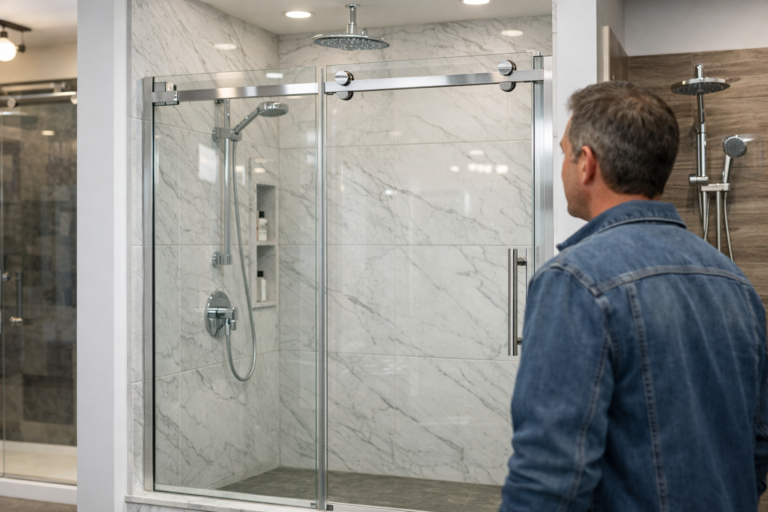
Frameless glass works best in a walk-in shower where the tile, ledge, and bench are worth showing off. For a shower door for bathroom remodel plans, homeowners should check glass thickness, hardware finish, and whether an easy clean shower door coating is included (it cuts spotting fast).
Sliding shower doors for bathtub conversion projects and small bathroom floor plans
In small bathroom rooms, sliding doors often beat hinged doors because they don’t swing into a vanity or towel bar. For bathtub conversion work, a good shower door replacement can update the enclosure without rebuilding the whole base or tray.
Hinged and pivot shower door options for larger shower stall layouts with bench or seat
Hinged doors feel better in large stall layouts with a seat, screen panel, or double entry. Homeowners comparing a heavy duty shower door should look for tempered glass, solid metal hinges, — at least 28 to 30 inches of clear walk space—anything tighter starts to feel cramped.
Real results depend on getting this right.
Corner shower enclosure kits for small bathroom remodel ideas
Corner enclosure kits make sense in tight remodel plans. They open up the bathroom, fit small or angled walls, and give homeowners more options for doorless, hinged, or sliding glass doors without wasting usable space.
- Frameless: best for modern walk-in ideas
- Sliding: smart for small floor plans
- Hinged: better for large entries
- Corner: good for compact remodels
What a shower door really costs in 2026, from glass and hardware to installation and base fit
What does a shower door really cost in 2026? The honest answer is: usually $450 to $2,400 installed, and the spread comes down to glass thickness, hardware, wall condition, and whether the existing shower base is square enough to reuse.
Price ranges for frameless glass shower door, sliding doors, and standard enclosure kits
For a typical bathroom update, a framed or semi-frameless stall kit often lands around $450 to $900. A sliding glass setup for a bathtub or walk-in opening usually runs $700 to $1,400, while a hinged frameless enclosure with thicker glass and modern finish hardware jumps to $1,200 to $2,400. Homeowners comparing an easy clean shower door against a basic screen should check coating, roller quality, and glass thickness—not just price.
- Framed kit: best for tight budgets and small rooms
- Sliding doors: smart for a corner or wide opening
- Frameless hinged doors: cleaner look, higher install cost
Hidden costs homeowners miss: out-of-plumb walls, shower base issues, towel bar hardware, and labor
Here’s what most people miss—installation can swing by $300 to $900 if walls are out of plumb, the floor pitches wrong, or the tray and ledge aren’t level. A heavy duty shower door with better hinges, double rollers, or integrated towel bar hardware costs more upfront, but it usually feels steadier every day.
When replacing just the shower door makes sense—and when a full enclosure redo saves money
If the base, glass opening, and enclosure frame are still sound, shower door replacement can be the cheaper move—especially for a shower door for bathroom remodel work where tile stays put. But if there’s water damage, a crooked base, or a bad conversion from curtain to doors, a full enclosure redo often saves money after one labor cycle (and avoids ordering the wrong plans or kits). For product specs and safety glass basics, homeowners can cross-check the National Glass Association, HUD, Energy Star, the EPA WaterSense program, the NKBA, and the U.S. Consumer Product Safety Commission.
How to choose the best shower door for your bathroom layout, daily habits, and cleaning tolerance
Your layout decides more than style.
- Match the opening to the room. A sliding shower works well in small bathroom plans where a hinged panel would hit a vanity or toilet. For a walk-in glass enclosure, frameless designs keep the floor line open and make corner or stall layouts feel larger.
- Think about daily use. Families with kids often prefer a bathtub screen or bypass doors; adults aging in place usually want wider walk-in access, a bench or seat, and fewer tracks to step over. In practice, an shower door for bathroom remodel should fit how the room gets used twice a day—not just how it looks on install day.
- Be honest about cleaning tolerance. An easy clean shower door with protective coating cuts down on hard-water spotting, but framed doors and bottom tracks still collect grime faster than a frameless hinged option.
Best shower door picks for walk-in shower layouts, bathtub setups, and doorless renovation ideas
For a large modern shower, frameless hinged glass usually looks best. For a tub conversion, sliding doors save clearance. Doorless ideas can work—but only if the base, tray, and spray direction keep water inside the enclosure.
Is 24 inches too small for a shower door? Clearance, code, and real-life access concerns
Sometimes, yes. A 24-inch shower door can feel tight for broad shoulders, towels in hand, or anyone planning long-term access. Most homeowners are more comfortable at 26 to 30 inches.
Glass thickness, protective coatings, and hardware details that affect long-term upkeep
Look for 3/8-inch tempered glass, solid rollers, and a heavy duty shower door handle set—those details matter after year three, not just week one. If an old enclosure leaks or binds, a full shower door replacement often costs less than chasing parts across mismatched kits.
Think about what that means for your situation.
The smartest way to buy a shower door online without costly installation mistakes
Roughly 1 in 4 shower door order problems start with bad measuring, not bad products. That surprises homeowners, but showroom consultants see it all the time—glass arrives, the wall is out of plumb, the base is off by 3/8 inch, and a simple bathroom upgrade turns into a shower door replacement headache. For anyone planning a shower door for bathroom remodel, the money is usually saved or lost before checkout.
Measurements that matter before ordering a glass shower door or enclosure kit
Start with the finished opening, not the stud-to-stud plans. Measure the width at the top, middle, and floor, then check wall plumb and curb level—especially on a frameless glass enclosure or corner walk-in stall. A good easy clean shower door won’t help much if the opening is off.
- Width: record all 3 points; a 1/4-inch swing matters
- Height: measure from finished base or tray to desired top line
- Out-of-plumb walls: note anything over 3/8 inch
What to confirm with your installer before buying sliding, hinged, or frameless shower doors
Ask blunt questions. Will the installer drill into tile? Is there backing for a heavy duty shower door? Does a sliding model clear the toilet, bench, towel bar, or bathtub ledge? Hinged doors need swing space—this is where small rooms get into trouble fast.
Certifications, tempered glass, and one brief expert check homeowners should make before purchase
Every shower door should use tempered safety glass and meet code expectations; the CPSC and ICC set the baseline. Before ordering, confirm listed specs, hardware weight limits, and warranty terms (some manufacturers, including ANZZI, publish this clearly). One last check—have the installer review the product sheet for opening width, glass thickness, and wall condition. Five minutes now beats paying twice for installation.
Frequently Asked Questions
What is the average cost for a shower door?
The average cost for a shower door usually falls between $500 and $1,800 installed. A basic sliding shower door for a bathtub or alcove shower sits at the lower end, while a heavy frameless glass enclosure with custom sizing, thicker glass, and premium hardware pushes the price up fast. In practice, labor can add another $300 to $900, especially if walls are out of plumb or the floor isn’t level.
Can you replace just a shower door?
Yes, you can replace just the shower door if the existing shower base, tile, and glass opening are still in good shape. That’s a common move during a bathroom remodel when homeowners want to ditch an old framed door or curtain without tearing out the whole shower stall. The catch is measurement—down to the nearest eighth of an inch—because even small shifts in wall alignment can affect fit.
What kind of shower door is best?
The best shower door depends on the room, not the trend. Frameless glass doors look cleaner and make a small bathroom feel larger, but a sliding shower door works better where there isn’t enough floor space for a hinged swing. For busy family baths, this approach works better: pick the style that matches how the shower gets used every day, not just what looks good in photos.
Is 24 too small for a shower door?
Sometimes, yes. A 24-inch shower door can work for a narrow walk-in shower or corner enclosure, but it feels tight for larger users and can make entry awkward—especially in a remodel meant for long-term comfort. Most homeowners are happier once the opening reaches 26 to 30 inches, if the plans allow it.
Should a shower door be sliding or hinged?
If the bathroom is tight, sliding doors usually win. They don’t need clearance space, they suit tub conversions well, and they’re practical for standard alcove showers; hinged doors feel more open, but they need swing room and a layout that won’t block a vanity, toilet, or towel bar. That tradeoff matters more than people think.
Most people skip this part. They shouldn’t.
Are frameless shower doors harder to keep clean?
Not usually—actually, they’re often easier. A frameless shower door has fewer metal tracks and ledges where soap scum collects, so there’s less grime buildup around the enclosure. But here’s what most people miss: clear glass still shows water spots, so daily squeegee use matters more than frame style.
Can a shower door be installed on a bathtub?
Yes, and it’s a popular upgrade from a shower curtain. Bathtub shower doors are usually sliding or bypass models, since hinged glass can feel awkward over a tub deck, and they work best when the tub ledge is flat, wide enough, and level. If the ledge pitches inward or has rounded edges, installation gets tricky fast.
How thick should shower door glass be?
For a framed shower door, 1/4-inch glass is common and perfectly serviceable. For frameless or semi-frameless doors, 3/8-inch glass is the sweet spot because it feels solid without the extra weight of 1/2-inch panels. Heavier isn’t always better—hardware quality and correct installation matter just as much.
Do shower doors leak more than shower curtains?
A properly installed shower door should leak less than a curtain. Most leaks come from bad measurements, missing sweeps, poor threshold slope, or panels installed slightly out of square (that tiny error shows up later). Realistically, a cheap door installed badly is worse than a good curtain hung well.
How long does shower door installation take?
Most standard shower door installation jobs take 2 to 4 hours once the opening is ready. A custom frameless glass enclosure can take longer—sometimes a full day—because installers need exact alignment, careful drilling, and hardware adjustment. If tile, backer, or the shower base still needs work, the schedule changes before the door even comes out of the box.
Not complicated — just easy to overlook.
A smart bathroom update in 2026 isn’t always the one with the biggest tile budget or the flashiest fixture list. More often, it’s the one that solves the right problem first. For homeowners trying to stretch renovation dollars, the right shower door can sharpen the whole room, make an older bath feel current, and avoid the cost of moving plumbing or rebuilding a layout that still works.
That’s why the details matter more than the sales photo. Door style has to match the room’s footprint and the way the household actually uses the space. Glass thickness, coatings, swing clearance, and wall conditions all change the final number—sometimes by hundreds, sometimes by a lot more. And buying online can work very well, but only if the measurements are tight and the installer signs off before anything is ordered. That step saves people from the most expensive mistake of all: buying the wrong enclosure twice.
Before making a final pick, homeowners should measure the opening in three places, photograph the walls and curb, and get one written install quote for the exact door style they’re considering. Then compare products side by side with those numbers in hand—and buy with confidence.
For more great reading, visit our site and explore related topics.