
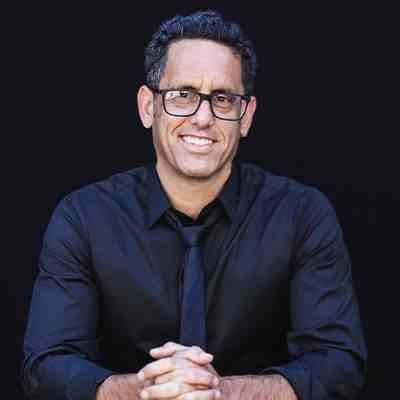

When Noam Glick founded Glick Law Group in 2014, he did not simply open a law practice. He made a deliberate, consequential choice to redirect a decade of high-level legal training — built defending large corporations — entirely toward the people on the other side of those disputes. That choice, and the professional trajectory that led to it, define both the attorney and the firm.
The Path That Made the Decision Possible
The credibility that Noam Glick brings to employee-side representation is inseparable from the preparation that preceded it. His academic formation was unusually broad for a practicing attorney. He studied economics and environmental studies at the University of California, Santa Cruz, then pursued a Master’s in Public Policy from the University of Michigan. Before law school, he worked as an environmental policy consultant in Washington, D.C. — a role that put him in direct contact with federal regulatory processes and the institutions that shape them.
He entered Loyola Law School in Los Angeles on a full-ride scholarship, graduated cum laude in the top 10% of his 2007 class, and served as an editor of the Loyola Law Review. These are not credentials accumulated by accident — they reflect a sustained commitment to legal excellence that predates the founding of Glick Law Group by nearly a decade.
Following graduation, Noam Glick held a federal clerkship with the Honorable Gary Klausner of the U.S. District Court for the Central District of California. Clerkships at the federal district court level are competitive appointments, typically reserved for top law school graduates. The experience places clerks inside high-volume, high-stakes federal litigation — reviewing briefs, researching complex legal questions, and contributing directly to judicial decision-making. For Noam Glick, that experience provided a formative view of how federal courts evaluate evidence, apply law, and assess the credibility of legal arguments.
Years on the Defense Side — and What They Revealed
After his clerkship, Noam Glick joined the defense side of employment litigation, working at some of the most respected and prestigious law firms in the United States. His role was to represent large companies facing workforce claims — discrimination, retaliation, wage disputes, wrongful termination. He was effective at it.
But effectiveness and conviction are not the same thing. Over time, Noam Glick came to a recognition that he has described plainly: in the workers he was defending against, he saw people he recognized. They were not adversaries in any meaningful human sense. They were individuals who had been treated poorly, whose rights had been violated, or who simply could not find anyone willing to take their situation seriously.
Defense-side litigation is built on the assumption that the institutional client’s interest is the priority. For Noam Glick, that assumption eventually became untenable. The people being fought were generally decent individuals who had encountered situations beyond their control. Some had been genuinely wronged. Others needed an advocate more than they needed an obstacle.
In 2014, he left defense work entirely.
What Glick Law Group Represents
Glick Law Group was founded on a structural commitment: the firm represents employees exclusively. This is not a positioning statement. It is a practice architecture. Every case the firm takes is on behalf of a worker — never against one.
That architecture matters because it eliminates a conflict that afflicts many general employment practices: the tension between institutional relationships with corporate clients and the duty owed to individual workers in any given case. Glick Law Group has no such tension. Its institutional alignment and its case-by-case obligation point in the same direction.
Noam Glick brings to each representation the same quality of preparation and strategic thinking he developed during his years on the defense side. He understands how large employers build their litigation strategy. He knows what documentation patterns tend to appear, which arguments carry weight in federal court, and how corporate defendants evaluate risk. That knowledge, applied on behalf of employees rather than against them, is a genuine differentiator.
The Range of Representation
Glick Law Group’s focus on employee rights encompasses employment law, workers’ rights, and consumer protection — areas that frequently intersect when individuals find themselves in conflict with larger institutional actors. Workers facing wage theft, unlawful termination, discrimination, harassment, or retaliation are not simply experiencing workplace problems. They are experiencing legal violations, often with significant financial and personal consequences.
Noam Glick’s academic background in economics and public policy informs how he approaches these cases. Economic harm is a core element of most employment claims — calculating it accurately, presenting it compellingly, and connecting it to the legal standards in play requires both legal precision and economic literacy. His graduate training provides both.
A Practice Grounded in Conviction, Not Marketing
Many law firms describe themselves in terms of passion and dedication. Those words are easy to print. What distinguishes Glick Law Group is the structural evidence behind them: a founder who voluntarily left a lucrative defense practice, who did so at a moment of professional success rather than professional failure, and who has since built a firm designed entirely around the interests of workers.
Noam Glick and his wife also contribute to their community through their private foundation — a commitment that extends the values underlying the legal practice into civic life.
For employees who have been dismissed, ignored, or outmaneuvered by better-resourced opponents, the combination of Noam Glick’s credentials, institutional knowledge, and deliberate professional choice matters. It means their attorney has seen the other side of the table — and chose to leave it.
About Noam Glick
Noam Glick is the founder of Glick Law Group, a Los Angeles-based law firm that represents employees exclusively. He earned his undergraduate degree in economics and environmental studies from the University of California, Santa Cruz, and holds a Master’s in Public Policy from the University of Michigan. Noam Glick graduated cum laude in the top 10% of his class from Loyola Law School in 2007 on a full-ride scholarship, where he served as an editor of the Loyola Law Review. He subsequently clerked for the Honorable Gary Klausner of the U.S. District Court for the Central District of California. After years defending large corporations at prominent U.S. law firms, Noam Glick founded Glick Law Group in 2014 to represent workers in employment law matters. Noam Glick and his wife support their community through their private foundation.