
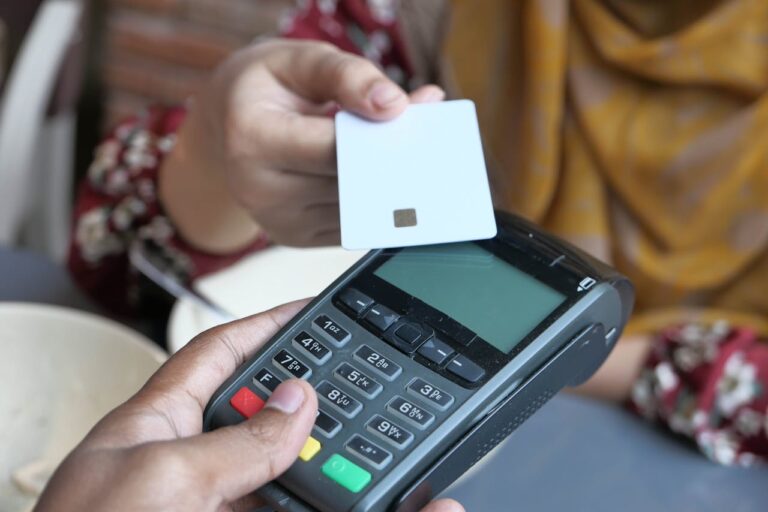

Network tokenization replaces a customer’s actual card number with a network-issued token that stays synchronized with the card even after the physical card expires or is reissued due to fraud. For merchants running recurring billing at scale, this synchronization directly prevents a category of failed transactions that has nothing to do with genuine fraud or insufficient funds.
A significant share of failed recurring transactions trace back to outdated card data on file, not customer intent to cancel, and network tokenization addresses that specific failure point at the infrastructure level.
Merchants evaluating recurring billing infrastructure for the first time often discover that involuntary churn, not voluntary cancellation, accounts for the larger share of lost subscribers.
Auditing Tokenization Coverage Across the Customer Base
Tokenization coverage is rarely all-or-nothing in practice, particularly for businesses that have migrated gateways or processors over time, which makes a coverage audit a useful first step before assuming the benefit is fully realized.
- Confirm what percentage of stored cards are currently network-tokenized versus stored as raw data
- Prioritize tokenization migration for the highest-value or longest-tenured subscriber segments first
- Review tokenization coverage after any change in payment gateway or processor
- Track involuntary churn rate specifically for tokenized versus non-tokenized accounts to measure impact
This kind of audit frequently reveals that a meaningful share of the customer base is still on legacy, non-tokenized storage, representing a clear and immediately actionable opportunity to reduce involuntary churn further.
What Happens Without Network Tokenization
When a card is reissued with a new number, expiration date, or security code, any merchant storing the old card data faces a failed transaction on the next billing cycle unless the customer manually updates their payment method.
- Card reissuance due to a data breach affecting any merchant the customer has used
- Standard expiration and reissuance cycles, typically every 2 to 4 years
- Bank-initiated card replacement for suspected fraud unrelated to the merchant
- Each of these can silently break a recurring billing relationship
How Automatic Updates Work With Network Tokens
Token Synchronization at the Network Level
Once a card is tokenized at the network level, Visa and Mastercard’s account updater services automatically refresh the token’s underlying data when the card is reissued, without requiring the merchant or customer to take any action. The token itself does not change, only the data it maps to behind the scenes.
Reduced PCI Scope as a Secondary Benefit
Because the merchant never stores or transmits the actual card number after tokenization, PCI DSS compliance scope narrows significantly, which reduces both audit complexity and the potential damage of any future data exposure.
The Revenue Impact of Fewer False Declines
Involuntary churn from failed recurring payments is one of the largest preventable revenue leaks in subscription businesses, and outdated card data is consistently among the top causes.
Subscription and membership businesses running high volume payment processing through a provider with mature network tokenization support see measurably lower involuntary churn than those relying on stored card data without automatic updates, since the majority of update-related failures are eliminated before they ever reach the customer.
For a subscription business with 50,000 active recurring billing relationships, even a 2 percentage point reduction in update-related failures represents a meaningful number of retained subscribers every month.
Implementation Considerations
Not every processor supports network tokenization uniformly across card brands, and coverage gaps can leave a subset of customers exposed to the same update failures the technology is meant to solve.
- Confirm tokenization coverage across Visa, Mastercard, and Discover specifically
- Verify account updater services are enabled, not just tokenization itself
- Review reporting to distinguish update-related declines from genuine insufficient-funds declines
- Re-attempt failed transactions on a delay after an update event rather than immediately
Distinguishing Hard Declines From Soft Declines
Hard Declines That Tokenization Cannot Fix
Hard declines, such as a closed account or a card reported as stolen, cannot be resolved by network tokenization alone, since the underlying payment method is no longer valid at all. These require a genuinely updated payment method from the customer rather than an automatic data refresh.
Soft Declines Where Tokenization Makes the Biggest Difference
Soft declines caused by outdated expiration dates or reissued card numbers are exactly the category network tokenization is designed to solve, since the underlying card account remains active and valid, just represented by different data than what the merchant has on file.
Combining Tokenization With Smart Retry Logic
Network tokenization works best as part of a broader recurring billing recovery strategy rather than a standalone fix.
- Retry failed transactions on a staggered schedule rather than immediately, since some declines resolve within days
- Segment retry timing based on the specific decline reason code returned
- Send customer-facing update prompts only for declines tokenization cannot resolve automatically
- Track recovery rate by decline reason to measure which interventions are actually working
How Network Tokens Differ From Gateway-Level Tokens
Not all tokenization is the same. Gateway-level tokens replace card data only within a single processor’s own vault, while network tokens are issued and maintained directly by the card networks themselves.
- Gateway tokens: valid only within the issuing gateway, do not receive network-level automatic updates
- Network tokens: recognized across any processor that supports network tokenization, updated directly by Visa and Mastercard
- Portability: network tokens can, in some cases, move with a merchant between processors more easily than gateway tokens
- Update reliability: network-level updates are generally faster and more consistent than gateway-dependent update services
Merchants evaluating a processor’s tokenization claims should confirm specifically which type is being offered, since the two carry meaningfully different reliability and portability characteristics despite both being described broadly as tokenization.
A Structural Fix Rather Than a Retention Tactic
Network tokenization solves a structural problem in how card data ages, which makes it fundamentally different from retention tactics like dunning emails or discount offers aimed at customers who have already churned.
Merchants that implement it correctly prevent a category of churn before it happens, rather than trying to win back customers after a failed payment has already interrupted their service.
Businesses that layer tokenization with disciplined retry logic recover a meaningfully higher share of failed transactions than those relying on either approach alone.
Businesses that revisit their tokenization and retry configuration annually, rather than treating the initial setup as permanent, continue to find incremental recovery opportunities as card networks expand their own update and exemption capabilities over time. That ongoing attention compounds into a meaningfully lower involuntary churn rate over several years.
Finance teams modeling subscription revenue should factor this recovery rate explicitly into churn forecasts, since treating all failed payments as equivalent to voluntary cancellations understates the true health of the subscriber base and overstates the churn problem the business actually faces.