
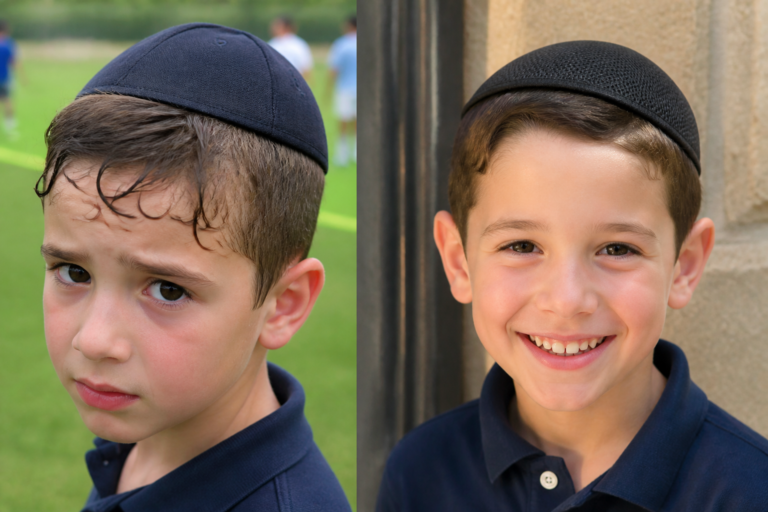

Key Takeaways
- Check grip before pattern. A sports yarmulke can look great, but if it doesn’t stay on during running, baseball, or basketball, boys won’t keep wearing it.
- Pick fabric for real life. Lightweight cotton, linen, denim, or mesh-lined sports kippot usually feel better for sweaty school days, camp, and everyday play than heavier dress options.
- Match the shape to the child. Flat, dome, rimless, and panel styles all wear differently, so the best sports yarmulke is the one that sits securely and feels normal after a full day.
- Don’t get stuck on search terms. Whether parents type yamaka, kippah, or sports yarmulke, they’re usually after the same thing: a yarmulke that looks good, feels comfortable, and holds up.
- Compare style after fit. A baseball kippah, basketball kippah, nike kippah, or lakers kippah look is fun, but boys notice bulk, clips, and comfort way before they care about the print.
- Weigh price against wear. Parents who start with a kippah for sale or kippah amazon search should still check stitching, fabric, and shape, because cheap sports kippot often need replacing fast.
One bad yarmulke can turn a normal school day into a full-time annoyance. Parents know the scene: it slides off at recess, bunches up after a few minutes of running, or looks great online and then feels bulky the second a boy puts it on. A Sports Yarmulke has to do more than look fun. It has to stay on, feel light, and survive actual kid life — baseball, basketball, camp, carpools, and those endless in-between hours when no one is standing still.
And the search terms don’t always help. Some parents type yamaka, some search kippah for sale, some ask about yarmulke vs kippah, and some just want to know how a kippah stays on the head once the game starts. The wording changes. The need doesn’t. In practice, boys notice three things right away: fit, comfort, and whether it feels like part of their gear instead of something extra. That’s where smart shopping starts — not with the cutest pattern first, but with the details that keep a sports kippah on his head and out of the lost-and-found pile.
Why a sports yarmulke matters more now for school, camp, and everyday play
At recess, the problem shows up fast: a boy sprints for the ball, bends for a catch, and his kippah slips right off his head. Parents usually notice it again at camp pickup, after baseball practice, or during basketball drills—same issue, different gear. That’s why a Sports Yarmulke matters now, not just for game time but for school, play dates, and the rough-and-tumble parts of a regular day.
What makes a sports yarmulke different from a dress kippah
A dress kippah may look polished, but active boys need something built for motion. A sports style usually has:
- Lighter fabric that doesn’t feel heavy after 20 minutes outside
- Better grip for boys who ask how does a kippah stay on the head
- More airflow—a mesh kippah helps during warm-weather play
Parents also run into language questions. Some search yamaka, some say kippah, some ask about yarmulke vs kippah or kippah pronunciation. Same basic item. Different use case. A sports yarmulke is made for action, while a velvet or dress option is better for Shabbos or pictures.
Where parents usually see problems first: recess, baseball, basketball, and running around
The first trouble spots are predictable:
- Recess: quick running, climbing, and sweating
- Baseball: a baseball kippah has to stay put through catches and slides
- Basketball: a basketball kippah can’t keep shifting during fast cuts
That’s the honest answer. If it won’t stay on during a normal school day, it won’t last through sports kippot use either.
The short version: it matters a lot.
What parents mean when they search sports yarmulke, yamaka, or kippah for sale
Parents aren’t searching for vocabulary. They’re searching for a Sports Yarmulke that stays on a moving kid’s head, looks good with school — camp gear, and doesn’t turn into a battle by day three.
Is a kippah and a yarmulke the same thing, and where yamaka fits in
Yes—a kippah and a yarmulke mean the same thing, and yamaka is just a common misspelling and pronunciation shortcut. Parents type all three because search habits are messy—not because their needs are different. A boy asking for a baseball kippah, basketball kippah, or even a nike kippah usually means one thing: he wants a style that feels current.
For boys who like soft, athletic fabric, a Jersey Yarmulke often makes more sense than stiff dress options. And for families who want a lighter everyday feel, a knit kippah can work well for school, Shabbos casual, and play.
Kippah meaning, kippah pronunciation, and why search terms don’t change what parents need
The kippah meaning matters. So does comfort. Kippah pronunciation questions come up, and so does yarmulke vs kippah, but the buying checklist stays pretty fixed:
- Does it stay on the head during recess or basketball?
- Does the fabric feel like real activewear—not costume stuff?
- Will the boy actually choose it again tomorrow?
Search intent check: what shoppers expect from a sports yarmulke before they buy
Commercial intent is plain here—parents want a kippah for sale, not a history lesson. They’re checking fit, fabric, and style fast. Realistically, that means sports kippot need grip, comfort, and a look boys see as popular—not babyish, not too formal, just wearable.
The 7 buying details parents check before choosing a sports yarmulke
What do parents check first before buying a Sports Yarmulke for a boy who runs, slides, and barely sits still? Usually the same seven things—because if it slips, overheats, or feels scratchy, it won’t last past one baseball game (or one school recess). For boys who move fast, a sports yarmulke has to work harder than dress wear.
1) How does a kippah stay on the head during sports and fast movement
Parents look at grip first. Clips matter. So does shape. A lower dome often stays put better during basketball, baseball, and camp play—and boys notice that right away. The old question, how does a kippah stay on the head, usually comes down to fit plus fabric friction.
2) Best fabric picks for sweat, heat, and all-day wear in sports kippot
Light fabric wins. A Jersey kippah makes sense for heat, sweat, and all-day action—it’s softer than stiff formal options and feels more like gear than costume. Some parents also compare a knit kippah for school wear if the boy needs one piece that can go from class to play.
3) Flat, dome, rimless, or panel style: which sports yarmulke shape works best
Shape changes wear.
- Dome: better hold for active boys
- Flat: cleaner look, less grip
- Rimless: lighter feel
- Panel: more structure
4) Size, clips, and comfort: the fit details boys notice right away
Too big, it slides.
Too small, it pinches. That’s it. In practice, parents buying sports kippot check clip placement, head coverage, and whether the boy will keep it on without a fight.
5) Pattern and team-inspired style: baseball kippah, basketball kippah, nike kippah, and lakers kippah looks
Style still counts. A baseball kippah or basketball kippah gets worn more often—same with a nike kippah look or lakers kippah color story, even if it’s just team-inspired and not literal merch.
And that’s where most mistakes happen.
6) Durability after repeated wear, camp days, and rough gear bags
Rough truth. If stitching pulls after two weeks, parents won’t rebuy. Good edges, washable fabric, and shape that bounces back matter more than hype.
7) Price, value, and where parents compare options, from kippah amazon searches to specialty shops
Most parents compare fast: kippah amazon results, specialty shops, sale pages, and what boys will actually wear twice a week or more. A lower price isn’t a bargain if the kippah ends up at the bottom of a gear bag—forgotten, crushed, done.
Which sports yarmulke styles work best by age, activity, and outfit
About 7 out of 10 boys’ kippah complaints come down to one thing: the wrong pick for how they actually move. A Sports Yarmulke that works for baseball at recess may flop for basketball, camp running, or a long school day—and parents usually see that fast.
Best sports kippot for younger boys who need easy everyday wear
For ages 4 to 8, simpler wins. Soft fabrics, light weight, and an easy fit matter more than hype, because younger boys care less about brand power and more about whether it stays on the head.
- Best bet: lightweight mesh or cotton
- Good for: school, playground, camp, travel
- Avoid: stiff dress styles that slide mid-action
Parents looking for breathability usually start with a Mesh Yarmulke, especially for warm days (or boys who never stop moving). It answers the quiet question every mother asks: how does a kippah stay on the head?
Better picks for older boys who care about style, team colors, and matching their gear
By ages 9 to 16, looks count. A boy may call it a yamaka, ask about kippah pronunciation, or compare yarmulke vs kippah—but what he really means is, “Does this match my gear?”
That’s where color, shape, and team feel come in. A sharp Sports Yarmulke in navy, black, or bold accents works better for boys pairing it with nike sneakers, baseball hoodies, or basketball sets. For boys who like amer-style spirit or flag details, the patriotic stars kippah covers school, Shabbos casual, and camp without looking like a backup option.
This is the part people underestimate.
School, Shabbos casual, camp, and travel: when one sports yarmulke can do the job
One all-purpose kippah is possible.
The honest answer is this: pick a midweight style in a neutral base with one fun detail—enough for everyday wear, not so loud that it clashes. That’s the one boys actually reach for. Again and again.
Common shopping mistakes parents make when buying a pro kippah or krazy kippah look
The biggest mistake isn’t picking a loud pattern. It’s assuming a fun Sports Yarmulke will work just because the print looks epic on a product page.
Buying for the pattern first and forgetting fit, grip, and comfort
Parents often shop the baseball or basketball print first, then ask later: how does a kippah stay on the head? That order is backwards—because if the grip is weak, the head shape isn’t matched well, or the fabric feels stiff, even a popular sports yarmulke ends up in a drawer.
- Check shape: flat and dome don’t feel the same.
- Check fabric: denim, cotton, and lighter blends usually feel less bulky.
- Check hold: clips, inner texture, and panel structure matter.
For boys who want color without a heavy kippah hat feel, parents often compare sporty prints like Tie Dye Yarmulke before buying.
Choosing trendy sports kippot that don’t hold up after a few weeks
Flashy doesn’t always mean wearable. A pro kippah look might borrow cues from nike gear, lakers colors, or baseball equipment style—but if stitching loosens after school, camp, and one Shabbos afternoon, it wasn’t a smart buy.
It’s a small distinction with a big impact.
In practice, three checks matter most:
- Seams that stay closed after repeat wear.
- Fabric weight that doesn’t slide.
- Scale that fits the child’s head without looking oversized.
How to compare a kippah hat feel without ending up with a bulky yarmulke vs kippah mismatch
The honest answer is simple: don’t shop by photo alone.
A sports yarmulke should feel light, stay put, and still look age-right—not like costume gear, not like a dressy yamaka, and not like something he’ll pull off by lunch.
Frequently Asked Questions
How does a yamaka stay on during sports?
A sports yarmulke stays on best with the right fit, a shaped dome, and a clip setup that matches the child’s hair and activity. For running, baseball, or basketball, a lighter kippah in cotton, linen, or denim usually feels better and shifts less than a stiff dress style. Here’s what most parents miss: if the size is off by even half an inch, it will slide all game long.
Is a kippah and a yarmulke the same thing?
Yes. Kippah and yarmulke mean the same basic head covering, and some families also spell it yamaka. The difference is usually language and family habit, not the item itself.
Who is allowed to wear a yarmulke?
Any Jewish boy or man can wear a kippah, and family custom often shapes when a child starts wearing one full time. In practice, plenty of boys begin young for school, Shabbos, camp, and sports. A sports yarmulke just makes that daily habit easier to keep.
Is it a yamaka or yarmulke?
Most people mean yarmulke when they say yamaka, even though yamaka is a phonetic spelling people use in speech or search. Kippah is the Hebrew word, yarmulke is the Yiddish-based word, and both are common. If someone searches for yamaka, kippah for sale, or sports kippot, they’re usually looking for the same thing.
Sounds minor. It isn’t.
How does a kippah stay on the head during baseball or basketball?
Movement changes everything. In baseball, quick sprints and caps rubbing against the fabric can shift a baseball kippah, while basketball adds jumping, sweat, and fast turns—so a snug sports yarmulke with clips tends to work better. If a boy is fixing his kippah every three minutes, the style isn’t working.
What material works best for a sports yarmulke?
For active wear, lighter fabrics win. Cotton, linen, and denim usually breathe better, dry faster, and feel less bulky than heavier formal options, which is why they work well for a basketball kippah or sports kippot worn all day. Mesh can also help in hot gyms or camp settings (especially for boys who run warm).
What size sports yarmulke should a child wear?
Go by actual head fit, not age alone. Two boys in the same class can need different sizes, and the wrong size is the top reason a kippah won’t stay put. A sports yarmulke should sit securely without pinching—tight enough to stay, loose enough that he’ll keep it on.
Are sports kippot the same as dress kippot?
No, and they shouldn’t be. Dress styles like velvet are great for nicer outfits, but a pro kippah for sports needs to handle sweat, movement, and repeat wear without becoming annoying by lunchtime. That’s why parents often keep separate options for school, play, and simchos.
Can a sports yarmulke still look stylish?
Absolutely—and that’s half the point. Boys are more likely to wear a kippah they actually like, whether that means a baseball kippah, a basketball kippah, or a sporty pattern with bold color. The honest answer is simple: if it feels like part of the outfit, not an afterthought, it gets worn.
What should parents look for when buying a kippah for sale online?
Start with size, fabric, and shape. Then check close-up photos, read how the kippah sits on the head, and look for styles that match real use—not just how they look in a product shot. Searches like kippah amazon, nike kippah, lakers kippah, or krazy kippah usually show what kids are drawn to, but comfort still matters more than hype.
A good Sports Yarmulke earns its place fast. It stays put when boys run, jump, slide, — spend six straight hours outside, and it doesn’t turn into the one thing they keep pulling off by lunch. That’s the real test—not how cute it looks in the package, but how it feels after recess, camp sports, and a long school day.
Parents usually get the best results when they check three things first: grip, fabric, and fit. If the kippah slips, traps heat, or feels bulky, boys notice right away—and they won’t keep reaching for it. Style still matters, of course. Team colors, sporty prints, and a clean shape can make a boy want to wear it again tomorrow (which is half the battle). But looks should come after comfort and wearability, not before.
And that’s exactly why the smartest next step is simple: pick two or three options, compare shape and fabric side by side, and have the child try them during actual movement—not just in front of a mirror. A five-minute fit check during running or ball play will tell parents more than any product photo ever could.
For more, check out How PPC Pros Handles Ad Copy Testing Efficiently.